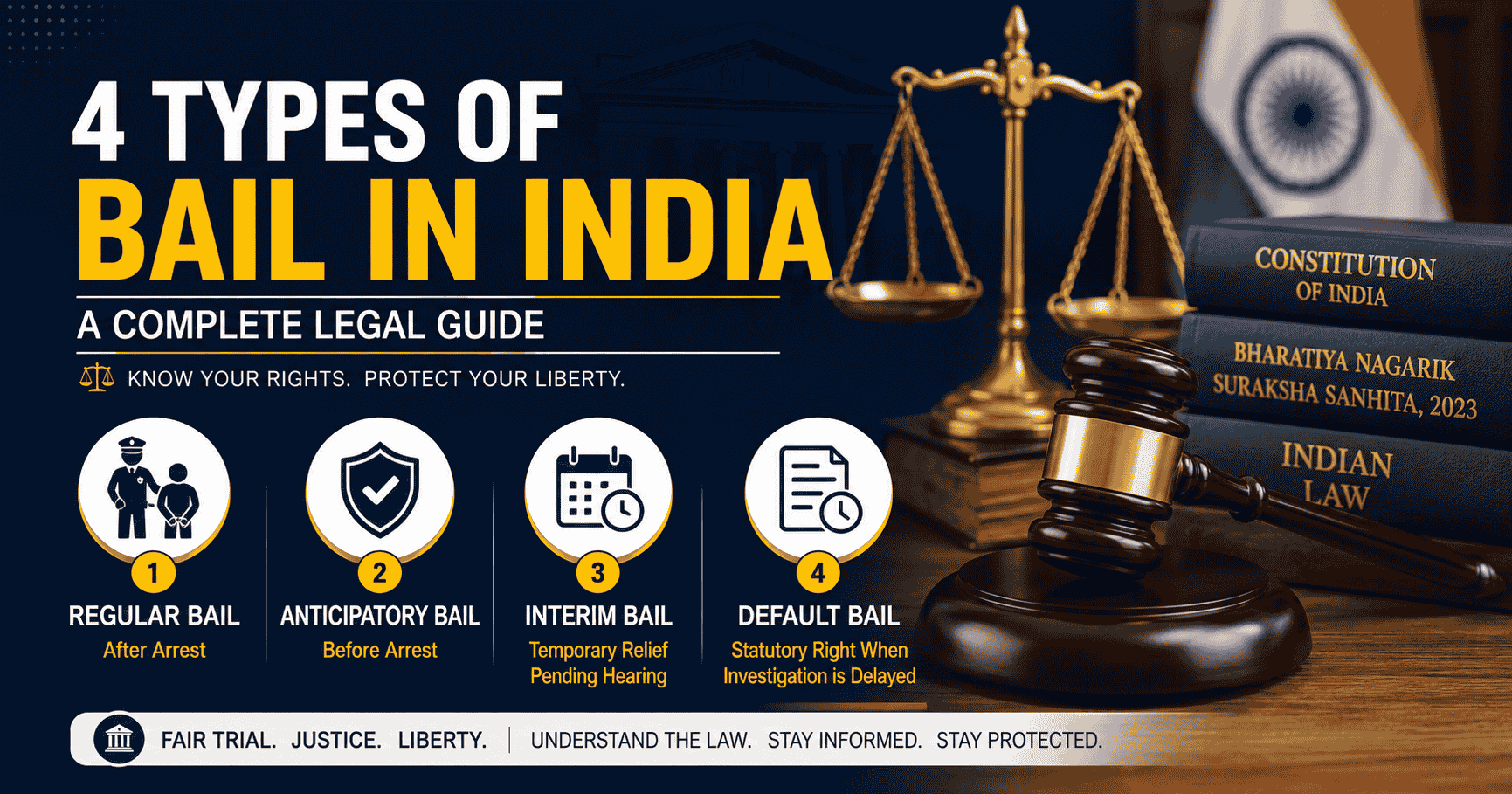
4 Types of Bail in India: A Complete Legal Guide
Introduction
Bail is a legal mechanism that allows an accused person to remain free while criminal proceedings are pending, subject to conditions imposed by the court. The concept of bail is based on the principle that a person is presumed innocent until proven guilty.
Indian criminal law recognizes different types of bail depending on the stage of the case and the circumstances of the accused.
This guide explains the four major types of bail available under Indian law.
1. Regular Bail
What is Regular Bail?
Regular bail is granted to a person who has already been arrested and is in police or judicial custody.
- Sections 480 and 483 BNSS, 2023
- Previously Sections 437 and 439 CrPC
When Can It Be Applied?
- After arrest by police.
- When the accused is in judicial custody.
- During investigation or trial.
Which Court Can Grant Regular Bail?
- Magistrate Court
- Sessions Court
- High Court
A person is arrested in a cheating case and remanded to judicial custody. The accused may file a regular bail application seeking release pending trial.
2. Anticipatory Bail
What is Anticipatory Bail?
Anticipatory bail is a pre-arrest legal protection granted to a person who apprehends arrest in a non-bailable offence.
- Section 482 BNSS
- Previously Section 438 CrPC
Conditions Imposed by Court
- Cooperate with investigation.
- Appear before investigating officer.
- Do not threaten witnesses.
- Do not leave India without permission.
A person fears false implication in a criminal complaint relating to business disputes and seeks anticipatory bail before arrest.
3. Interim Bail
What is Interim Bail?
Interim bail is temporary bail granted for a limited period until the main bail application is decided.
Purpose
It protects the liberty of the applicant while the court hears the main bail application.
The court grants temporary protection from arrest until the next hearing date.
Interim bail is not permanent relief. It expires unless extended or converted into regular or anticipatory bail.
4. Default Bail (Statutory Bail)
What is Default Bail?
Default bail is a statutory right available when the investigating agency fails to complete the investigation within the prescribed period.
- Section 187(3) BNSS
- Previously Section 167(2) CrPC
Time Limits
- 60 days for certain offences.
- 90 days for serious offences punishable with death, life imprisonment, or imprisonment of ten years or more.
If police fail to file the charge sheet within the statutory period and the accused applies before filing, the court must ordinarily grant default bail.
Conclusion
Bail plays a crucial role in balancing individual liberty with the interests of criminal justice.
- Regular Bail – after arrest.
- Anticipatory Bail – before arrest.
- Interim Bail – temporary protection pending hearing.
- Default Bail – statutory right when investigation is delayed.
Understanding these categories helps accused persons, lawyers, and litigants protect their legal rights effectively during criminal proceedings.